Unlock the full potential of fresh herbs in your cooking. From storage to preparation to the perfect pairing, this guide covers everything you need to know to make the most of these aromatic ingredients.
Introduction
Fresh herbs are one of the simplest ways to elevate your cooking. A sprinkle of fresh cilantro can brighten a curry. A few leaves of basil can transform a simple tomato sauce. And a sprig of rosemary can add depth to a roasted dish.
But cooking with fresh herbs can be tricky. Many people struggle with knowing how to store them, when to add them to a dish, or which herbs pair best with which ingredients. The good news? With a few simple tips, anyone can master the art of cooking with fresh herbs.
In this guide, I’ll share everything I’ve learned about cooking with fresh herbs. From storage to preparation to the perfect pairings, I’ve got you covered.
Why Fresh Herbs Matter
Fresh herbs are more than just garnish — they’re a key ingredient that can transform a dish. They add brightness, depth, and complexity. They can lift a heavy dish or add a fresh note to a light one.
Compared to dried herbs, fresh herbs have a brighter, more vibrant flavor. They also have a delicate texture that adds a pleasant contrast to many dishes. And they’re packed with essential oils that are released when they’re chopped or bruised.
How to Store Fresh Herbs
Proper storage is essential for keeping fresh herbs at their best. Here are a few methods:
Refrigerator Storage
Most fresh herbs stay fresh in the refrigerator. Place them in a glass of water, like a bouquet of flowers. Loosely cover with a plastic bag to retain moisture.
Freezing
Fresh herbs can be frozen for later use. Chop them and freeze them in ice cube trays with a little water or oil. Use them directly in soups, stews, and sauces.
Drying
Drying is a great way to preserve herbs for longer-term storage. Hang them in a cool, dark, well-ventilated area. Once dry, store them in an airtight container.
How to Prepare Fresh Herbs
Washing
Wash fresh herbs gently under cold running water. Pat them dry with a clean towel. Some herbs, like cilantro and parsley, can be chopped with their stems — the stems are flavorful.
Chopping
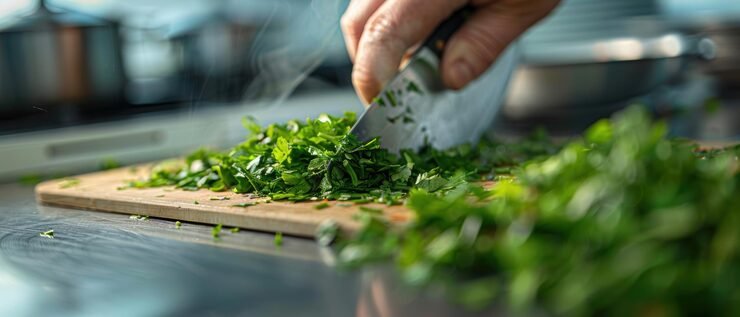
Use a sharp knife to chop herbs. A dull knife can bruise the herbs, causing them to lose flavor.
Adding to Dishes
When to add fresh herbs depends on the dish. For long-cooked dishes, add them near the end of cooking to preserve their flavor. For quick dishes, add them at the beginning.
Fresh Herbs and Their Uses
Coriander
Coriander adds a bright, citrusy note to dishes. It’s a staple in Indian cooking, used in curries, chutneys, and garnishes. It pairs well with cumin, garlic, and chili.
Mint
Mint has a cool, refreshing flavor. It’s used in chutneys, raitas, and teas. It pairs well with yogurt, lemon, and garlic.
Curry Leaves
Curry leaves have a distinct, aromatic flavor. They’re used in tempering for South Indian dishes. They pair well with mustard seeds, cumin, and coconut.
Basil
Basil has a sweet, slightly peppery flavor. It’s a staple in Italian cooking, used in pesto, pasta, and salads. It pairs well with tomatoes, garlic, and olive oil.
Cilantro
Cilantro has a bright, citrusy flavor. It’s used as a garnish in many Indian dishes and as a key ingredient in chutneys and sauces. It pairs well with cumin, lime, and chili.
Rosemary
Rosemary has a woody, pine-like flavor. It’s used in roasted dishes, soups, and sauces. It pairs well with garlic, lemon, and olive oil.
Thyme
Thyme has a subtle, earthy flavor. It’s used in soups, stews, and roasted vegetables. It pairs well with garlic, lemon, and rosemary.
Parsley
Parsley has a fresh, mild flavor. It’s used as a garnish and in salads, soups, and sauces. It pairs well with garlic, lemon, and olive oil.
Herb Pairings
Indian Cuisine
Coriander, mint, curry leaves, and cilantro are the most common herbs in Indian cooking. They pair well with cumin, garlic, ginger, and chili.
Italian Cuisine
Basil, parsley, and oregano are the staples of Italian cooking. They pair well with tomatoes, garlic, and olive oil.
Mediterranean Cuisine
Rosemary, thyme, and oregano are essential in Mediterranean cooking. They pair well with olive oil, lemon, and garlic.
Frequently Asked Questions
Q: Can I substitute dried herbs for fresh herbs?
A: Yes, but dried herbs have a more concentrated flavor. Use one-third of the amount you would use for fresh herbs.
Q: Why do my herbs lose their flavor quickly?
A: Herbs lose their flavor when they’re exposed to air and light. Store them properly and use them within a few days for the best flavor.
Q: Can I use herb stems?
A: Yes, many herb stems are flavorful. Use them in stocks, soups, and stews. Remove them before serving.