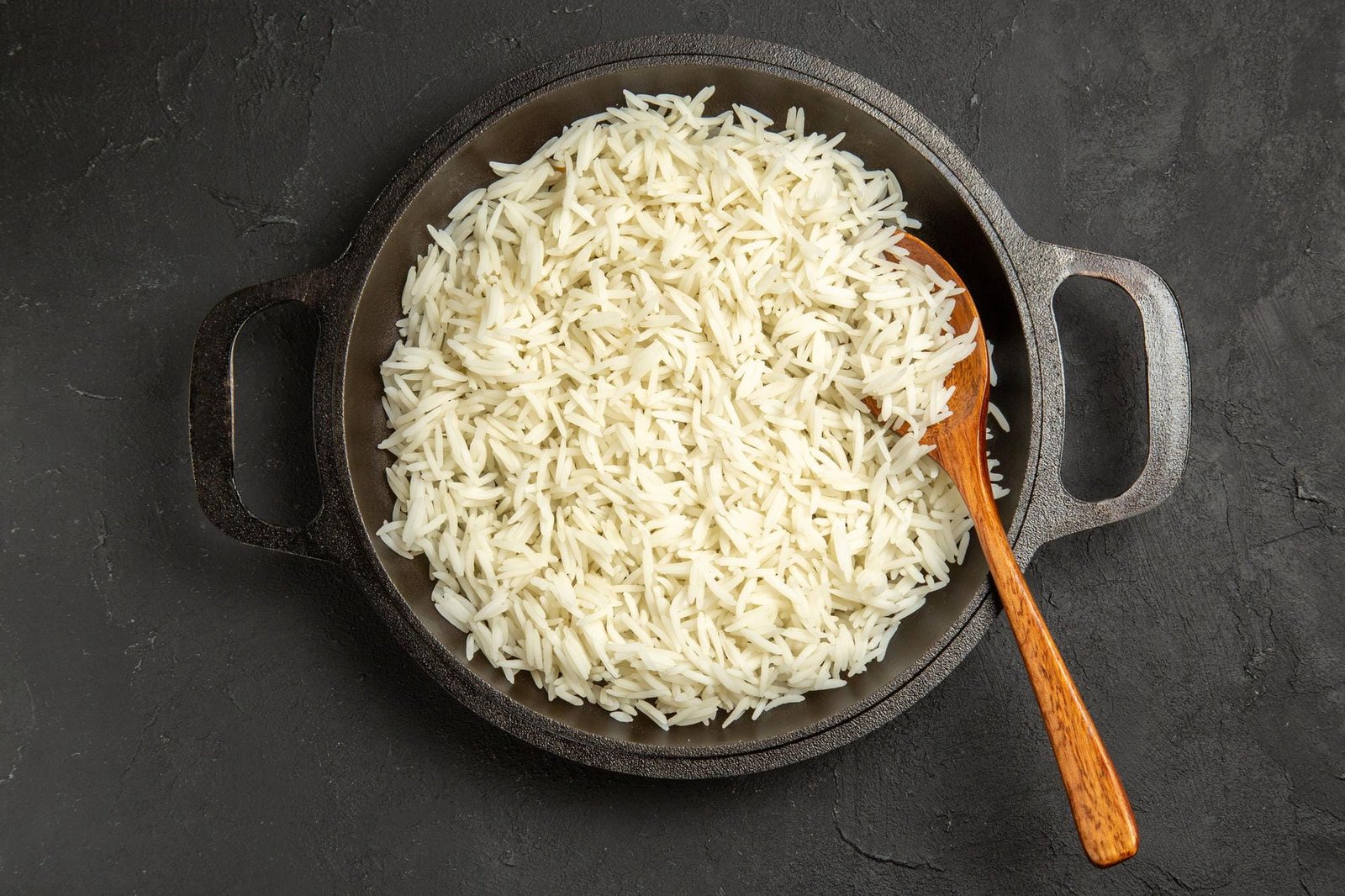
Perfect plain rice should be soft, fluffy and cooked through, with separate grains that are easy to serve. This simple method for how to make perfect plain rice uses everyday ingredients and clear steps to help you cook basmati rice at home. You only need a pot with a lid, the right amount of water and a little patience.
How to Make Perfect Plain Rice: Recipe Overview
This recipe uses long-grain basmati rice and the stovetop absorption method. Rinsing removes excess surface starch, and soaking helps the grains cook more evenly.
| Preparation time | 20 minutes, including soaking |
| Cooking time | 12–15 minutes |
| Resting time | 10 minutes |
| Total time | Approximately 42–45 minutes |
| Servings | 2 |
| Difficulty | Easy |
| Cooking method | Stovetop |
Cooking times and water requirements can vary depending on the rice variety and brand. The instructions below are a starting point for soaked basmati rice.
Ingredients for Perfect Plain Rice
The following quantities make approximately two servings.
| Ingredient | Quantity |
| Long-grain basmati rice | 1 cup |
| Water | 1½ cups |
| Salt | ¼ teaspoon, or to taste |
| Cooking oil or ghee | 1 teaspoon, optional |
Note: The 1½-cup water measurement is intended for soaked basmati rice cooked using the absorption method. Some varieties need more or less water, so check the packet instructions when available.
How to Make Plain Rice Step by Step
Step 1: Measure and Rinse the Rice
Measure one cup of basmati rice and place it in a bowl. Add water, gently move the grains around with your fingers and drain the cloudy water. Repeat three or four times, until the water looks less cloudy.
Rinsing helps remove excess surface starch, which can make the cooked rice sticky. Handle the grains gently to avoid breaking them.
Step 2: Soak the Rice
Cover the rinsed rice with fresh water and leave it to soak for 15–20 minutes. This allows the grains to absorb some water before cooking.
After soaking, drain the rice thoroughly. The cooking water measured in Step 3 should be fresh water, not the water used for soaking.
Step 3: Bring the Water to a Boil
Add 1½ cups of fresh water to a medium-sized pot. Add the salt and optional oil or ghee, then bring the water to a boil over medium-high heat.
Add the drained rice and stir gently once to distribute the grains. Avoid vigorous stirring, as it can break the grains.
Step 4: Cook the Rice on Low Heat
Allow the water to return to a gentle boil. Reduce the heat to its lowest setting that maintains a gentle simmer, then cover the pot with a well-fitting lid.
Cook for approximately 12–15 minutes. Keep the lid closed so the steam can cook the rice evenly. A heavy-bottomed pot can help prevent the rice from scorching at the bottom.
Step 5: Check Whether the Rice Is Cooked
After about 12 minutes, check the rice quickly if needed. The grains should be tender, and most or all of the water should have been absorbed.
If the rice is still firm and the pot looks dry, sprinkle in one or two tablespoons of hot water. Cover the pot and cook for another 2–3 minutes, then check again.
If water remains but the rice is nearly cooked, allow it to cook a little longer on low heat with the lid on. Avoid adding more water unless the grains are still firm and the pot is dry.
Step 6: Let the Rice Rest
Turn off the heat and leave the covered pot undisturbed for 10 minutes. This allows the remaining steam to finish cooking the grains and helps the moisture settle evenly.
Step 7: Fluff and Serve
Remove the lid and gently separate the grains with a fork or rice spoon. Lift the rice from the bottom rather than stirring it in circles.
Serve the rice while warm.
Common Mistakes to Avoid
Using Too Much Water
Excess water can make rice overly soft and sticky. Measure the water carefully and adjust it according to your rice variety rather than adding extra water without checking the texture.
Keeping the Heat Too High
High heat can cause the water to evaporate before the grains finish cooking. Once the water boils, reduce the heat and let the rice cook gently.
Opening the Lid Too Often
Lifting the lid releases steam and can affect cooking time. Keep the pot covered and check the rice near the end of the recommended cooking time.
Skipping the Resting Time
Fluffing the rice immediately after cooking can make the grains easier to break. Leave the covered pot to rest for 10 minutes before serving.
What to Serve With Plain Rice
Plain rice can be served with a simple accompaniment. You do not need to prepare another full dish to enjoy it.
- Raita: Serve with plain yoghurt raita for a cool, creamy side.
- Chutney: Mint or coriander chutney adds a fresh, tangy flavour.
- Achar: A small serving of mango or mixed vegetable pickle adds a spicy, sour taste.
Choose one or more of these options according to your preference. Plain rice can also be enjoyed on its own.
Frequently Asked Questions
What Is the Best Water Ratio for Plain Rice?
For one cup of soaked basmati rice, 1½ cups of water is a useful starting point for the absorption method. Other varieties may need different amounts, so check the packet instructions and adjust as needed.
Can I Make Plain Rice Without Soaking It?
Yes. You can cook basmati rice without soaking, but the cooking time and water requirement may change. Check the grains for tenderness before serving.
How Can I Tell When Plain Rice Is Fully Cooked?
The grains should be tender, with no hard centre, and most or all of the water should be absorbed. If the rice is still firm and the pot is dry, add a little hot water, cover the pot and cook for a few more minutes.
Can I Cook Plain Rice Without Oil or Ghee?
Yes. Both are optional. You can cook the rice with just water and salt, or leave out the salt if you prefer.
How Should I Store Leftover Plain Rice?
Refrigerate leftover rice promptly in a covered container, ideally within one hour. Keep it at 5°C (41°F) or colder and use it within 24 hours as a cautious food-safety guideline. Reheat it until steaming hot throughout, and avoid reheating the same portion more than once.
Can I Double This Plain Rice Recipe?
Yes. You can double the ingredients, but use a pot large enough to hold the rice as it expands. Cooking time may vary, so check that the grains are tender and the water has been absorbed before turning off the heat.